
When Progress Feels Harder Than It Should
Finding the Right Balance Between Commercial and Cultural
Every leader has felt it – that sense of effort without flow. The numbers look fine, yet progress feels harder than it should. Teams are busy but not always aligned. Meetings fill the diary, but decisions don’t stick.
It’s a common frustration. The business looks strong from the outside, but inside, the energy feels uneven. The problem isn’t ambition or intent. It’s balance.
The invisible tension inside every business
Every organisation leans naturally in one direction – commercial or cultural. Neither is wrong, but both carry risk when one dominates for too long.
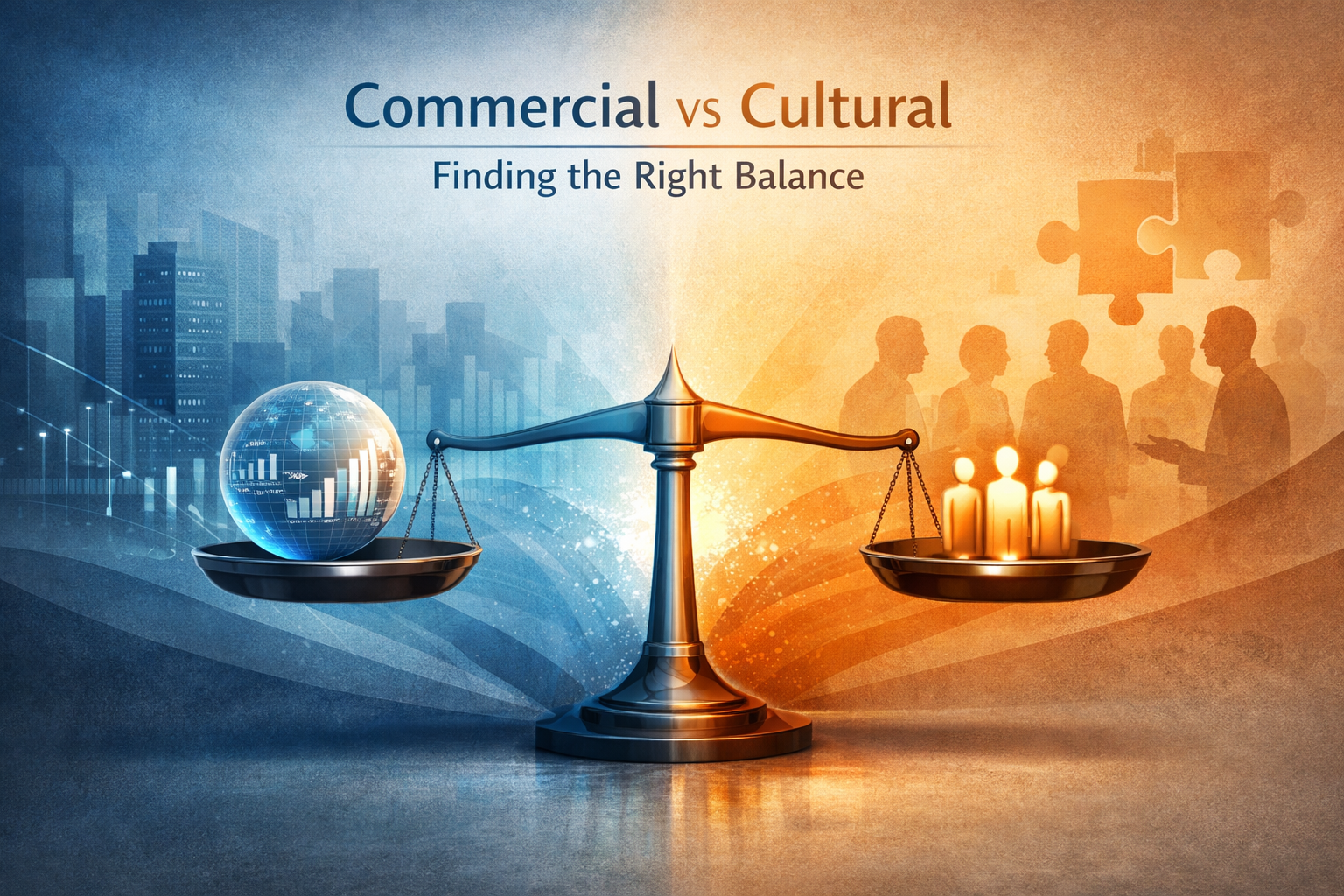
If the commercial side leads too strongly, you see structure without spirit. There’s control, efficiency, and focus, but the energy is flat. People follow the plan but not with conviction. Collaboration feels transactional. You get output, not ownership.
If the cultural side takes over, you see energy without traction. People care, but direction drifts. Teams feel engaged but struggle to prioritise. Meetings are upbeat but vague. Momentum builds, but it rarely sticks.
Both extremes cause drag. The first burns people out; the second burns time.
What really drives sustainable performance
Commercial and cultural forces aren’t opposites – they’re partners. High performance comes from holding both in balance. Commercial awareness gives clarity and discipline. Cultural awareness brings trust and motivation. Together, they create flow.
When that balance is right, you feel it immediately. Strategy conversations turn practical. Decisions move faster. People understand not only what they’re doing but why it matters. Leadership becomes lighter because systems and relationships reinforce one another.
Signs the balance is off
The imbalance shows up quietly at first:
• Repeated rework or confusion over priorities
• Teams pulling hard but not in the same direction
• Senior leaders propping up delivery
• Communication that informs but doesn’t inspire
• Engagement that looks fine on paper but feels flat in the room
These are not individual failings – they’re environmental symptoms.
When balance returns, everything gets easier
When the two sides work together, clarity meets connection. Accountability meets trust. Leaders stop firefighting. Teams start performing.
Balanced environments don’t just hit their targets – they sustain them.
Wingman’s role
Wingman helps businesses find and hold that balance through the LIFT Model – a framework that keeps commercial and cultural forces in sync. When structure and behaviour move together, performance becomes both consistent and human.
If your organisation feels like it’s pushing too hard for too little progress, it might be time to rebalance.
Leave A Comment
You must be logged in to post a comment.