
When Everyone’s Aligned in Words but Not in Action
Rebuilding Real Organisational Alignment
You’ve shared the strategy. Everyone agrees with it. Heads nod in meetings. Yet, as soon as people leave the room, different priorities reappear.
That’s not resistance. It’s a breakdown in Alignment.
The gap between intent and delivery
Alignment doesn’t fail in vision statements – it fails in translation. Each team interprets the plan through its own lens. Over time, differences in focus, language, or process create quiet drift.
Leaders start chasing consistency through pressure instead of system design. That’s when alignment turns from shared commitment into constant correction.
What real alignment looks like
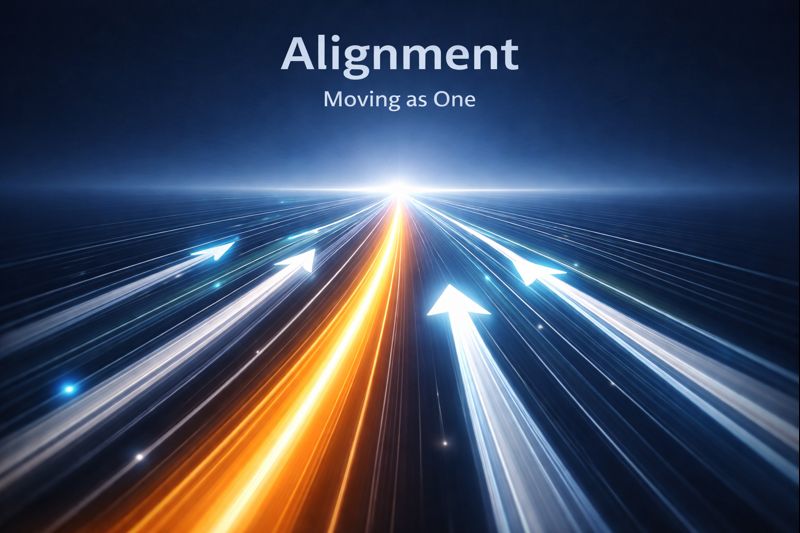
True alignment means everyone moves in the same direction, with shared priorities and joined-up decisions. It’s clarity at every level – from board to front line – about what success looks like and how to deliver it.
Alignment doesn’t mean agreement on everything. It means common ground on what matters most.
What to look for
• Teams making good progress individually but not collectively
• Confusion about what takes priority when trade-offs appear
• Strategies that feel clear at the top but fuzzy on the ground
These are all signs that alignment has weakened.
The impact of restoring alignment
When alignment returns, coordination becomes natural. Teams stop competing for resources. Decision-making gets faster because principles are shared.
The business stops pushing and starts flowing.
Wingman’s role
Wingman helps organisations rebuild joined-up delivery through the Alignment Dynamic of the LIFT Model. We help leaders connect strategy, structure, and behaviour so the business moves as one.
If you’re tired of repeating the same messages and chasing the same outcomes, alignment is likely the missing link.





Leave A Comment
You must be logged in to post a comment.