
Facilitating Implementation – Building Management Capability at the Point of Delivery
The capability gap in the middle
A recent post on this topic highlighted that facilitating implementation is about more than communication and organisational design. There is a capability dimension sitting underneath both of those things that is easy to overlook – and when it is overlooked, the strategy tends to slow down or stall at the very level of the organisation where it most needs to gain traction.
That level is middle management. The people responsible for translating strategic direction into practical team priorities, for making decisions that reflect the wider intent of the organisation, and for managing the day-to-day reality of getting work done in a way that moves things forward. This post looks at why that capability matters so much, and what getting it right requires.

The translation challenge
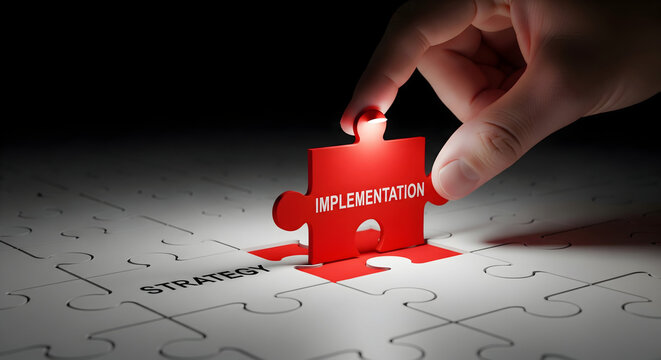
The work of implementation is fundamentally a translation exercise. Strategic intent – which is typically expressed at a high level of abstraction – has to be turned into something people can act on. That means connecting it to specific roles, specific decisions, and specific ways of working. It means making clear what matters most, what can wait, and how trade-offs should be made when priorities compete.
That translation is not automatic. It requires people who understand the strategy well enough to apply it intelligently in the context they are managing, and who have the skills to communicate it in a way their teams can engage with. Neither of those things can be taken for granted.
Many managers are highly competent in their technical or functional role, but have not been given much support in developing the specific capability to turn strategic direction into practical management. They may be very good at running their function, but less confident in how to talk about the broader strategy, how to connect it to what their team is doing, or how to handle questions and challenges when the direction is not entirely clear.
What good management looks like at the implementation stage

When managers are well equipped for this stage, a number of things tend to follow. Communication becomes more consistent, because people are not relying on individual interpretation to work out what the strategy means for them. Priorities become more visible, because managers are actively making them explicit rather than leaving people to guess. Decisions are easier to make, because there is a shared reference point to guide them.
Crucially, cross-functional working tends to improve as well. When managers across different parts of the business are all working from the same strategic reference point and applying it with a similar level of rigour, collaboration becomes more natural. There is less defensive positioning, less protection of functional territory, and more genuine focus on what the business is trying to achieve together.
That shift does not happen by accident. It is the product of investment – in developing capability, in creating the right conversations, and in building the habits that allow strategic intent to show up consistently in the way the organisation is managed day to day.
Giving managers what they need
Supporting managers at this level means more than providing them with information. It means giving them the space to understand what the strategy requires of them specifically, the opportunity to ask questions and challenge where things are not clear, and the confidence to apply strategic thinking in the situations they actually face.
It also means building in feedback loops. If managers are encountering situations where the strategic direction is unclear, or where different parts of the business appear to be pulling in different directions, that information is valuable. Creating ways to surface and act on it – rather than leaving managers to navigate those situations individually – is part of what makes implementation work.

Questions worth asking
• Do your managers have a clear enough understanding of the strategy to apply it in the situations they face day to day?
• Are they confident talking about the strategy with their teams – or do they tend to revert to functional priorities when communication gets difficult?
• What support is in place to help managers translate strategic intent into practical team priorities and decisions?
• Are feedback loops in place so that problems at the implementation level can be surfaced and addressed – rather than accumulated quietly?
• How well are managers across different functions working from the same strategic reference point, rather than independently defending their own priorities?

Leave A Comment
You must be logged in to post a comment.